Building Early-Season Fertility Without Overspending
Smart Spring Soil Decisions to Boost Crop Performance
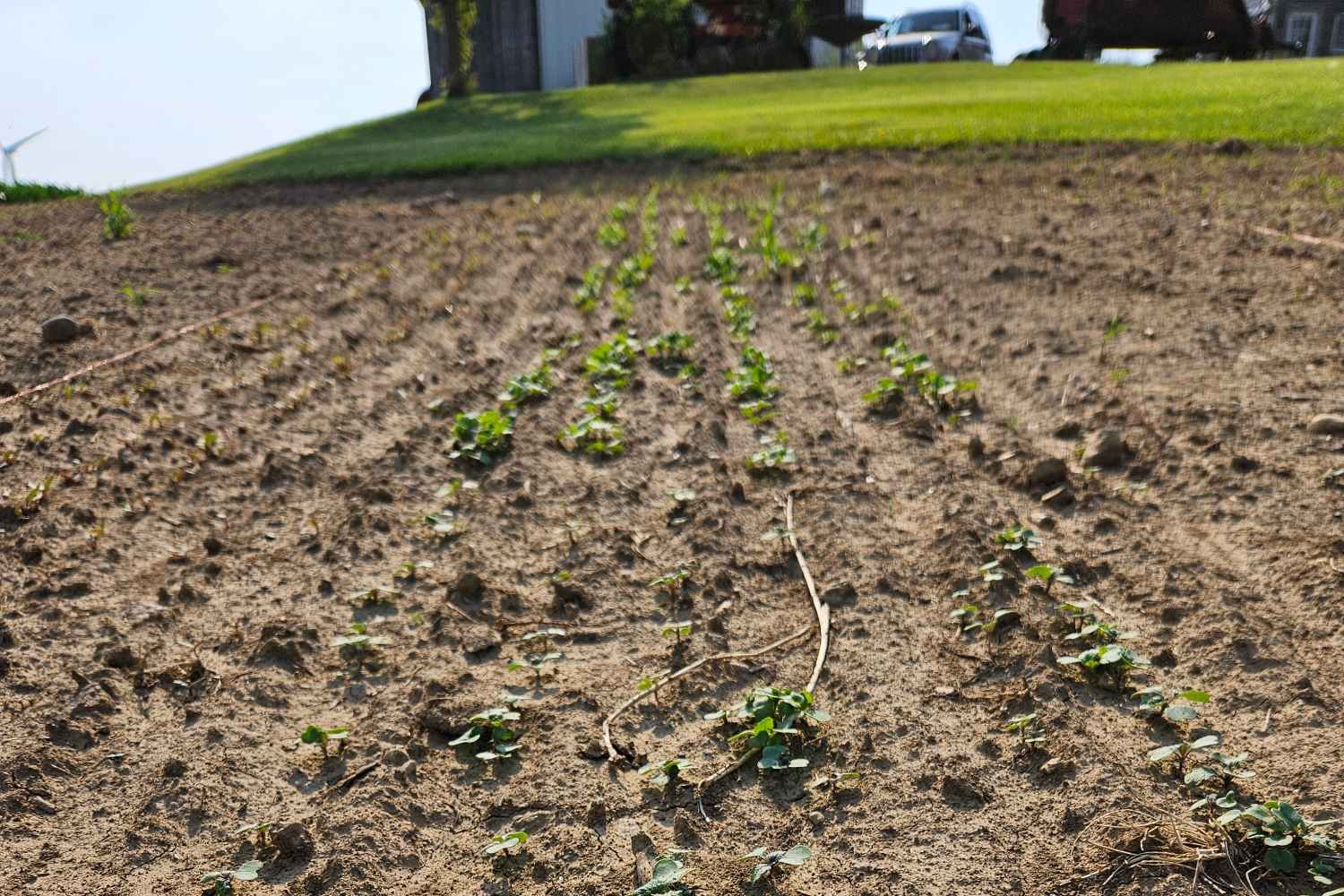
Early spring on a market garden is a season of overwhelming momentum. Plants are seemingly towering above you, waiting for transplant; beds are coming back into rotation, seed packets are everywhere, timelines are scribbled on half-crumpled sheets of paper and every decision feels as if it carries extra weight.
Fertility choices made in this window often feel very permanent, even though the season has barely started. When planting and financial margins are tight, and weather patterns feel unpredictable, there is a strong pull to act early and decisively, especially when inputs are expensive and time can be a coveted resource.
Early-season fertility is not about doing more. It is about doing what the soil can actually support at that moment. The most expensive fertility decisions I have made were not reckless; they were well-intentioned responses to spring pressure.
Market gardening taught me that restraint, when paired with in-field observation and timing, consistently delivers better outcomes than front-loading inputs in cold, quiet soils. Early fertility management works best when it aligns with soil function rather than strictly calendar urgency.
Soil Data
Soil testing is often the first place growers look for direction in the spring, and it plays a very important role. However, test results do not operate on an independent plane parallel to field history, recent weather or physical soil condition.
In early spring, nutrient availability is often constrained by temperature, moisture and biological activity rather than the total nutrient supply. Acting on lab data without this context frequently leads to applying inputs before plants can access them and efficiently use them.
In intensively managed market garden systems, past management matters deeply. Beds that carried heavy feeding crops the previous season, experienced harvest traffic or lost surface residue behave very differently from beds that rested or were protected.
Soil tests help identify long-term trends and potential limitations, but they do not override what is happening in the field. I have found far more value in using soil data to inform priorities rather than dictate immediate action.
Soil Biology
In healthy soils, biology is the quiet engine that turns nutrients into forms plants can use. Early in the season, that engine is still warming up, and heavy applications often remain unused or move in unintended ways.
Compost
On our farm, we’ve found that composted livestock manure applied in the fall supports soil biology and improves structure, creating a strong foundation for healthy early-season growth the following spring. Properly composted and handled, these amendments give microbes a head start without compromising food safety.
All growers need to follow recommended timelines and safe handling practices when using manure to reduce risk.
Supporting biology also means minimizing disturbance, preserving surface residue and timing amendments to the natural rhythm of the soil rather than the calendar. We’ve learned that nurturing the biological system early pays off far more consistently than front-loading fertility into soils that aren’t ready to process it.
Nitrogen
Nitrogen management illustrates this principle clearly. Nitrogen often attracts early attention because slow early growth feels alarming, particularly when transplants or direct-seeded crops fall behind expectations. Early nitrogen applications can feel productive, but in many cases, they do not translate into stronger early growth. Loss pathways remain active, and plant uptake remains limited until roots and biological systems are established.
Market gardeners have a significant advantage here. Smaller acreage allows for close monitoring and responsive decision-making. Instead of committing early, flexibility allows nitrogen decisions to follow crop development rather than precede it.
As crops establish and soils become more biologically active, adjustments can be made with greater confidence that nutrients will be used efficiently. Treating nitrogen as a season-long management decision rather than an early obligation has reduced waste and improved consistency on our farm.
Micronutrients
Phosphorus and micronutrients often create confusion early in the season as well. Visual symptoms that appear alarming in cool conditions frequently fade as soils warm and root systems expand. Many early-season deficiency symptoms reflect temporary unavailability rather than true shortage. Responding too quickly can lead to unnecessary applications that provide little benefit.
Patience plays an important role here. Allowing soil conditions to improve before reacting prevents chasing problems that resolve naturally. When true deficiencies exist, addressing them when plants can actively uptake nutrients leads to better outcomes and lower costs.
Observation remains one of the most valuable tools a grower has, especially in early spring.
Soil Structure
Soil structure deserves equal attention in early fertility conversations, though it is often overlooked. Compaction, surface sealing and poor aggregation restrict root growth and nutrient access regardless of the fertility present. Early-season traffic and working soils before they are ready can undo months or years of careful management.
In a market garden, where frequent passes are common and early access feels necessary, protecting soil structure becomes a foundational fertility practice. Beds with intact structure warm more evenly, drain more effectively and support healthier root systems. I have seen crops outperform neighboring beds with identical fertility histories simply because structure was preserved. Every fertility dollar stretches further when roots can actually reach nutrients.
Early-Season Planning
I have learned to evaluate early-season spending through a different lens. The most valuable investments are those that improve decision-making and soil function rather than chase ideal conditions. Interpreting trends rather than isolated results, targeting known limitations and prioritizing timing and placement consistently deliver stronger returns than broad, early applications.
What does not pay off is spending driven by urgency alone. Spring pressure can push growers into decisions that feel proactive but offer little benefit. Fertility inputs should solve specific problems, not simply provide reassurance.
Market gardeners and small row-crop farmers benefit from proximity to their fields. Daily observation creates opportunities to adjust management as conditions change. Leaving room to respond later in the season often outperforms early rigidity. Fertility management works best as an ongoing conversation between soil, crop and grower rather than a fixed plan established before soils are ready.
Early-season restraint is not passive management. It is an active choice to wait for alignment between soil function and crop demand. When that alignment occurs, nutrients are used more efficiently, crops establish evenly and profit margins improve.
The most successful early-season fertility programs are built on discipline rather than reaction. Protecting structure, supporting biology and allowing timing to guide decisions consistently outperform heavy early inputs. For market gardeners, where every dollar and every bed matters, that discipline becomes one of the most valuable management skills we can develop.