Agricultural Drone Market Forecast to Reach $23.17 Billion by 2034
The agricultural drone market is projected to reach $23.17 billion by 2034 as precision farming and drone services expand.
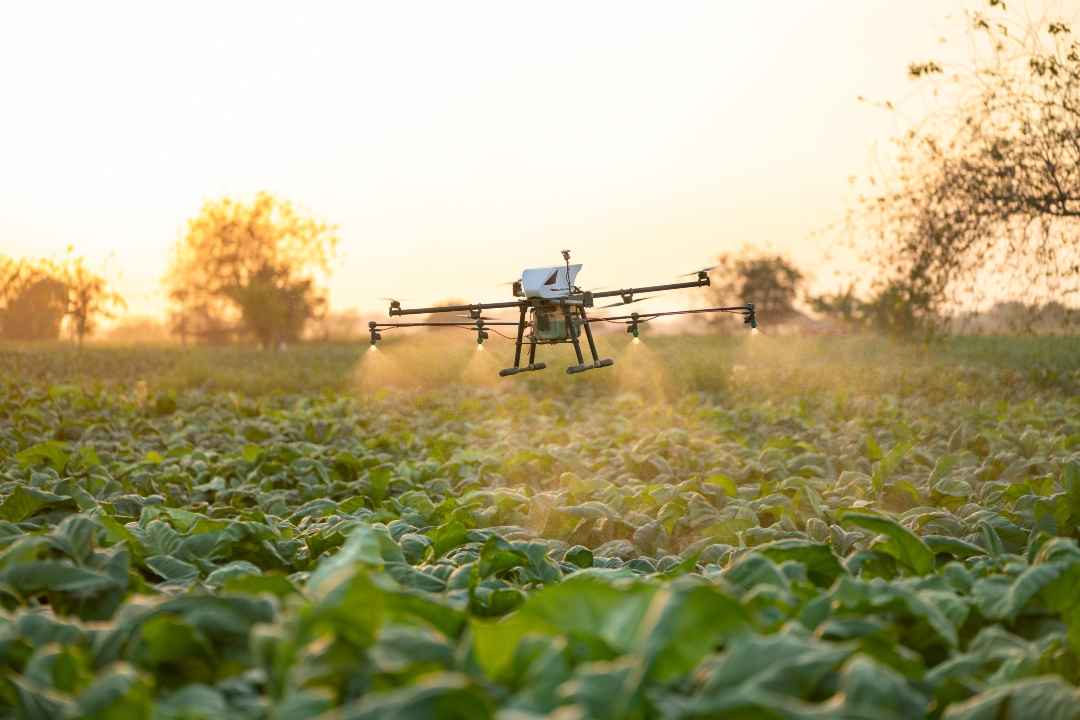
The global agricultural drone market is projected to grow from $3.21 billion in 2025 to $23.17 billion by 2034, representing a compound annual growth rate (CAGR) of 24.56% from 2026 through 2034, according to a new report from ResearchAndMarkets.com.
The report, Agricultural Drone Services Business Plan Report 2026, examines the market for agricultural drone services, along with the costs, equipment, operating requirements, and revenue models involved in establishing a drone-services business.
Agricultural drones are used for crop monitoring, field mapping, precision spraying, aerial surveying, crop-health assessments, irrigation monitoring, pest and disease identification, multispectral imaging, and agricultural data analysis. The report identifies growing adoption of precision agriculture, digital farming, and data-driven crop management as factors supporting demand for these services.
How Agricultural Drones Are Used
Drone imagery and data can help producers identify field variability and make decisions about irrigation, nutrient management, crop protection, and harvesting. Multispectral and thermal sensors, global navigation satellite system (GNSS) equipment, and data-processing platforms can turn aerial observations into information for crop management.
The report also identifies targeted spraying as an application that can reduce input waste, improve coverage, and limit unnecessary treatment of surrounding areas. Drone services can also reduce the time and labor required for field scouting, mapping, monitoring, and selected spraying operations.
Technology developments are expanding the range of agricultural drone applications. Improvements in autonomous navigation, battery performance, obstacle avoidance, sensor technology, and artificial intelligence (AI)-based analytics are among the factors identified in the report.
Fifth-generation (5G) connectivity can support the transmission of aerial imagery and prescription maps. The report cites field trials on U.S. corn farms that demonstrated 94% accuracy in identifying crop stress using onboard convolutional neural networks. It also states that private 5G networks can coordinate fleets of 10 or more drones and support daily monitoring of more than 1,000 acres.
Edge computing can process imagery locally, which the report says can strengthen data security. It also projects that module prices could fall below $500 by 2027, potentially improving accessibility for mid-sized farms.
Costs and Requirements for Drone-Service Businesses
The report examines the equipment and infrastructure needed to establish an agricultural drone-services business. Requirements can include spraying and imaging drones, cameras, multispectral and thermal sensors, batteries, charging systems, flight-planning software, data analytics platforms, maintenance tools, transportation, insurance, and trained personnel.
Facilities must accommodate secure drone storage, battery charging, payload preparation, equipment maintenance, data processing, and administrative work. Site selection considerations include proximity to agricultural areas, transportation access, electricity availability, workforce access, and applicable operating restrictions.
Operating expenses can include employee salaries, maintenance, battery replacement, transportation, electricity, insurance, software subscriptions, licensing, repairs, marketing, administration, and data processing.
The report outlines several potential revenue models for service providers, including per-acre pricing, per-operation fees, fixed contracts, seasonal packages, recurring service agreements, monitoring subscriptions, and customized agricultural analytics.
Regulatory Requirements and Financial Planning
Agricultural drone operators must account for applicable aviation regulations, business registration, drone registration, remote-pilot standards, flight permissions, airspace restrictions, agricultural spraying approvals, insurance obligations, environmental provisions, and data-protection requirements.
Additional certifications may depend on the country, drone category, payload, operating purpose, and service type. These can include drone and pilot certifications, equipment conformity, agricultural application authorization, safety standards, and quality or management-system certifications.
The report's financial analysis covers startup capital, working capital, service pricing, income and expenditure projections, taxation, depreciation, cash flow, profitability, and payback periods. It also examines Net Present Value, Internal Rate of Return, and how changes in major assumptions can affect financial results.
Potential funding sources and financial assistance for drones, vehicles, software, charging systems, and supporting infrastructure are also included.
Agricultural Drone Industry Developments
The report highlights two recent developments in the agricultural drone industry. In July 2026, DJI Agriculture introduced the Agras T55 and Agras T100 Dual Battery Spraying System globally, expanding its aerial spraying portfolio for large-scale farms and orchards. The platforms are designed to improve productivity per flight and per acre.
In February 2025, Yamaha Motor established Yamaha Agriculture, Inc. to advance automation and AI-driven digital crop management, particularly for specialty crops. The company integrates agricultural equipment, software, automation, and digital services for commercial growers.
The ResearchAndMarkets.com report also examines market segments, regional activity, key companies, business risks, marketing strategies, and growth opportunities for agricultural drone-service providers.